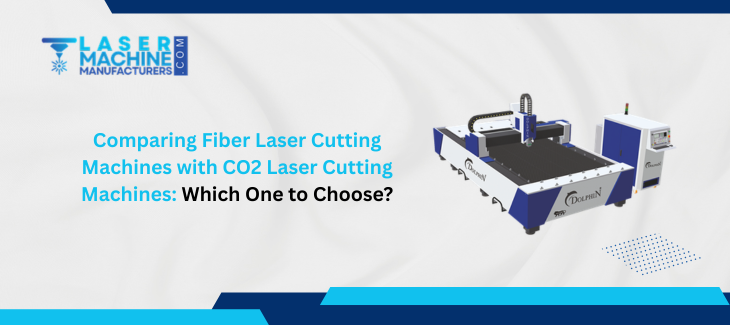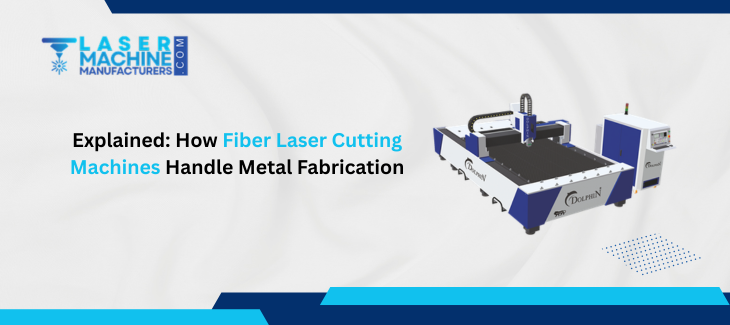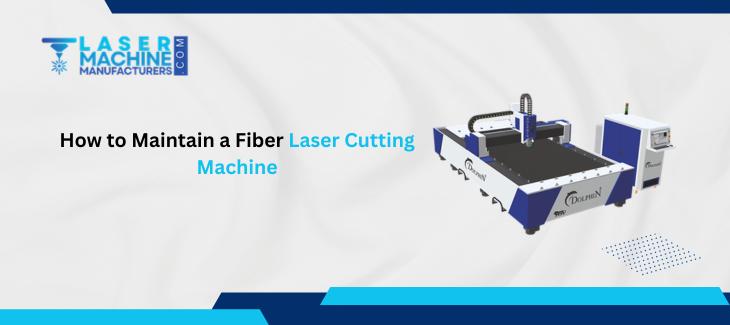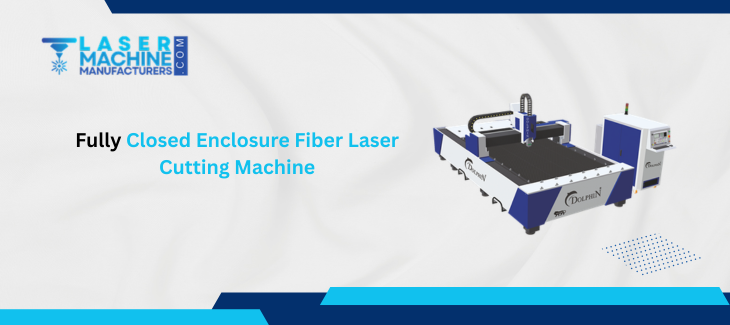
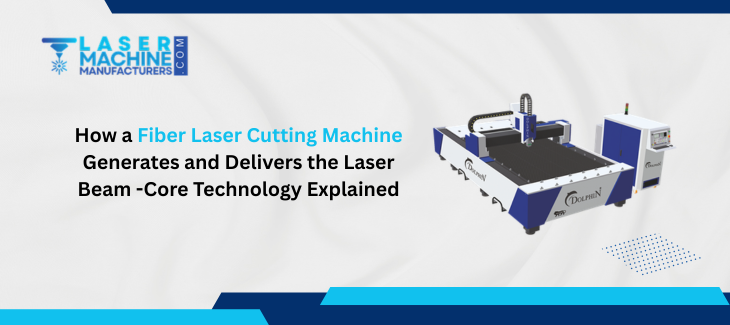
Alright, so picture this. You walk into a metal fabrication shop, and you see this machine just slicing through a thick steel sheet like it is warm butter. No blade, no grinding noise, just a beam of light doing all the work. That right there is a fiber laser cutting machine doing its thing.
Now, most people just see the cut and move on. But if you actually want to know what is happening inside that machine -where the laser comes from, how it gets to the right spot, what makes it so accurate -that is what this post is about. And no, you do not need an engineering degree to get it.
Okay, So Where Does the Fiber Laser Cutting Machine Even Come From
Good question. The laser does not just exist. Something inside the machine has to create it first.
There is a component called the laser source. Think of it as the engine room. Inside this box, there are laser diodes. These diodes push energy into a very thin glass fiber. Now this fiber is not ordinary glass -it has an element called Ytterbium mixed into it.
When all that energy from the diodes hits the Ytterbium atoms, those atoms get excited. And when excited atoms settle back down, they release energy as light. That light bounces around inside the fiber, builds up, and eventually comes out as a proper laser beam.
The beam that comes out is at around 1064 nanometers. Metals absorb this wavelength really well, which is a big reason why a fiber laser cutting machine cuts metal so cleanly and fast.
Now, about the power ratings you see -1kW, 3kW, 6kW, 20kW -those depend on how many fiber modules are packed inside the laser source. More modules, more power, thicker materials you can cut.
How the Beam Travels to the Cutting Area
So the laser is made. Now it needs to actually reach the metal. And here is where fiber laser machines do something really smart.
In Fiber Laser Cutting Machine beam travels through the same glass fiber it was created in. It does not go through open air. It does not bounce off a bunch of mirrors. It just travels inside a sealed fiber cable from the source to the cutting head.
Inside that cable, the beam keeps reflecting off the inner walls -a physics principle called total internal reflection. The light essentially cannot escape. It just keeps moving forward.
Compare this to old CO2 laser machines. Those had to bounce the beam through a series of open mirrors to get it from the source to the cutting spot. Every mirror was a potential problem -dust, misalignment, energy loss. Operators had to clean and align those mirrors constantly.
With a fiber laser cutting machine, that whole headache is gone. The beam is sealed inside a cable for the entire journey. So you get:
- Very little energy is lost during delivery
- No mirrors to clean or adjust regularly
- The cutting head can swing and move freely without messing up alignment
- Much more consistent beam quality throughout the day
For a production environment, this matters a lot.
What Actually Happens Inside the Cutting Head
In Fiber Laser Cutting Machine beam arrives at the cutting head. But it cannot just hit the metal as-is. A couple of things need to happen first.
After coming out of the fiber, the beam spreads slightly. A collimating lens fixes that -it makes the beam parallel again. Then a focusing lens concentrates the beam down to a very small point. We are talking sometimes 0.1 mm in diameter.
At that kind of concentration, the energy per square millimeter is enormous. The moment that the focused spot touches metal, the material melts or turns to vapor almost instantly. That is your cut.
There is also gas flowing out of the nozzle right alongside the beam. Usually nitrogen or oxygen. The gas does two things -it clears out the molten material so the cut path stays open, and it also affects the edge quality. Nitrogen gives you a cleaner edge with no oxidation. Oxygen speeds things up when you are cutting something really thick.
The Machine Knows Where to Cut Because of the CNC System
The laser and the cutting head do not decide on their own where to go. A CNC motion system handles that. You load a design file -the machine reads it and moves the cutting head along those exact paths using servo motors and linear guides.
The movement is very precise and repeatable. So whether you are cutting a simple rectangle or a complex part with curves and tiny holes, the fiber laser cutting machine follows the same path accurately every single time. That consistency is what makes it useful for production work.
Why Shops Are Switching to Fiber Laser Cutting Machine
The technology itself is one reason. But the day-to-day practical stuff is what actually convinces shop owners:
- Energy efficiency is around 30 to 40 percent -CO2 sits at around 10 percent
- Electricity bills drop noticeably over the months of operation
- Smaller machines need no water cooling system at all
- The laser diodes last around 100,000 hours -very low maintenance compared to CO2
- Speed on thin sheet metal is significantly higher than that of older machines
When you add all that up over a year of operation, the difference is real.
Check out our high-performance fiber laser cutting machines for faster cutting speeds and cleaner finishes on metal sheets.
FAQs about Fiber Laser Cutting Machine
Q1. What is the basic difference between a fiber laser and a CO2 laser?
Fiber sends the beam through a glass cable. CO2 uses open mirrors. Fiber is faster, cheaper to run, and way less maintenance.
Q2. Can a fiber laser cutting machine cut wood or plastic?
It is not built for that. Metals are its thing. For non-metals, CO2 machines are the better pick.
Q3. Nitrogen or oxygen -which gas is better?
Nitrogen for clean edges without oxidation. Oxygen for cutting thick steel faster. Depends on what you are making.
Q4. How long does the laser source last before it needs replacing?
Around 100,000 hours of actual run time. Most shops go years before touching it.
Q5. Is operating this machine safe for workers?
Yes, if you follow the safety setup properly. Enclosed work area, laser safety eyewear, and proper interlocks. Standard stuff that comes with the machine guidelines.
Follow us on Facebook for more simple guides and insights on laser cutting machines and industrial technology.