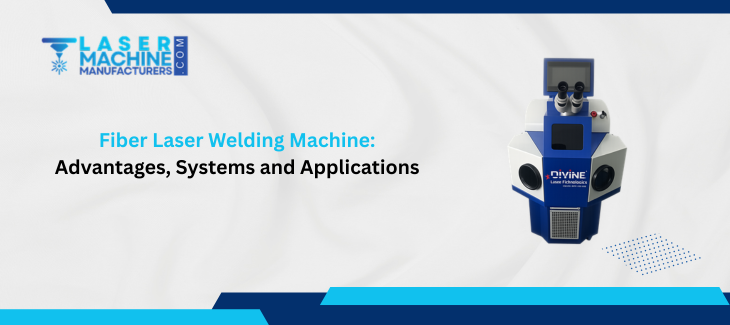
A fiber laser welding machine joins metal using a tightly focused beam sent down an optical fiber onto the joint. Weld quality goes up, distortion drops, and the finish needs almost no cleanup.
That combination is why workshops across India keep switching from stick and MIG setups. This piece covers how it works, why it beats older methods, and where it earns its keep.
What Is A Fiber Laser Welding Machine?
At its core, it is a laser source paired with a fiber optic cable and a welding head that aims the beam exactly where you need it.
The source builds the beam first, a flexible cable routes it to the head, and the head narrows it onto the joint with almost no wasted energy.
Contact welding tools touch the metal; this one doesn’t, which cuts contamination risk by a wide margin.
The setup has four core parts:
- Laser source unit and fiber optic cable
- Welding head with a focusing lens
- Chiller or cooling loop
- Control panel for setting parameters
Why Should You Choose A Fiber Laser Welding Machine Over Traditional Welding?
Speed, precision, and lower costs – that’s the short answer.
Stick and MIG welding lean on the welder’s hand, and even a skilled operator leaves uneven beads that need grinding. This machine skips most of that since the beam holds a fixed spot size and power, weld after weld. Labor hours drop, throughput climbs.
What Are The Main Advantages Of A Fiber Laser Welding Machine?
Strong, clean joints without cooking the surrounding metal – that’s the headline benefit.
Shops care because scrap rates fall and parts hold shape better. Everything below ties to speed, precision, or cost.
A short list of the real gains:
- A narrow heat-affected zone that spares nearby material
- High travel speed, which raises daily output
- Low upkeep and modest power draw
Shops running daily jobs usually see this equipment pay for itself within a year or two.
How Does A Fiber Laser Welding Machine System Work?
Electrical energy goes in, a laser beam comes out, and it fuses the metal at the joint.
The laser source generates light energy that runs through the fiber cable with almost no loss, a step up from older rigs that bounced the beam through mirrors and lenses.
At the head, the beam squeezes into a tiny, intense spot. Metal there melts almost instantly, and as it cools, the two pieces fuse into one.
None of it holds together without the power supply, cable, lens, and cooling loop working in sync. Get that right, and the machine runs shift after shift without much drama.
Where Is A Fiber Laser Welding Machine Used In Industry?
Automotive plants, electronics lines, jewelry benches, medical shops, and sheet metal fabricators all lean on this equipment.
Car makers use it on body panels, exhaust parts, and battery enclosures for EVs, and the clean bead means fewer hands touching the part afterward. Electronics manufacturers like it for the opposite reason: low heat keeps circuits from frying. Jewelers run small-format versions for delicate repair work.
Where it shows up most often:
- Automotive body and chassis welding
- Battery pack assembly for electric vehicles
- Stainless steel kitchen and appliance fabrication
Fabrication shops in Jaipur, Delhi, and Ahmedabad now bring these machines in for custom orders too, not just the big OEM lines.
Which Factors Should You Check Before Buying A Fiber Laser Welding Machine?
Power rating, warranty terms, service response, and metal compatibility – check all four before you sign anything.
No two shops run the same job mix, so the right machine depends on material thickness and daily part count.
Worth checking before you commit:
- Power rating matched to your thickest material, not your average job
- How fast the local service team responds
Skipping this is how shops end up with equipment that’s underpowered or overkill.
What Is The Future Of Fiber Laser Welding Machine Technology?
More automation, tighter quality feedback, and a bigger role in EV manufacturing – that’s where things are headed.
Production lines keep pushing for shorter cycle times, and automated welding cells are becoming standard rather than a luxury add-on. Pair a robotic arm with this machine, and it can chase complex weld paths with barely a human hand involved.
That pairing cuts scrap and supports large-scale work in renewable energy and electric mobility. For specs and options, this resource is worth checking: Fiber Laser Welding Machine Guide.
Frequently Asked Questions
1. Is a fiber laser welding machine suitable for thin metal sheets?
Yes – thin sheets are where it shines, since heat distortion stays minimal.
2. How long does a fiber laser welding machine typically last?
With regular maintenance, it can stay reliable for many years.
3. Does a fiber laser welding machine need special operator training?
Not much. Controls are largely automated, so basic training covers most shops.
4. Can a fiber laser welding machine weld different metal types?
Yes, including stainless steel, aluminum, carbon steel, and other common metals.
5. Is a fiber laser welding machine more expensive than traditional equipment?
Upfront cost is higher, but lower maintenance and labor bills even it out.
Stay connected on Facebook for the latest updates, welding tips, and new fiber laser machine solutions.